
Javascript Disabled?

Your browser seems to have Javascript disabled. This website requires Javascript to display and run properly. It's totally safe.

If you want to continue using this site, please enable Javascript from you browser settings first, then come back here and refresh this page.

Condo Maintenance Expenses

Condo

Reachable – that is how owning a condominium unit is these days. Gone were the days that the highly regarded condo unit was considered as just eye candy. Buying a condo nowadays is as easy as purchasing your own car. In fact, they have almost the same terms of sale – low/zero downpayment, low and reasonably priced monthly amortization, etc. But that is not all there is to it.

Here at Dolmar, we want to show you not just the positively light and pleasant side of condo living. We would also like you to realize that comfortably beautiful living always has a cost, regardless of property developer. And that cost – aside from your monthly amortization – usually depends on your unit’s floor area and/or location.

Association dues. Whether you live in a regular house or a condo, you will still need to pay your association dues. You start paying for this as soon as the unit has been turned over to you. These are used for the overall operational expenses – a shared condominium cost by all unit owners and paid monthly or annually (depending on developer) to the property management office.

In other words, the proceeds collected from unit owners are used for the upkeep of the whole condominium. Electricity and water in common areas are covered by said dues, swimming pools and public restrooms included. You also pay for security, as the wages of janitorial, maintenance workers, and security guard services come from this fee that you need to pay regularly. Your fee also covers overall maintenance repairs, income taxes (because said dues are now subject to income tax and value-added tax as per BIR Revenue Memorandum Circular No. 9-2013), and licenses. These dues are computed based on a fixed price per floor area. The price range depends on the location of the condominium. There is also a minimal late fee charge if this is not paid on time – which is understandable since it covers a lot of things for your comfort, entertainment, safety and security.

Parking fees. Speaking of parking, it has a separate fee. The unit itself is affordable. If you have a car though, you might want to think twice about getting your own parking slot. (Because… well, where would you park your ride, right?) It does not come with the condo package. It has a separate lot price. In other words, you not only buy shelter for yourself, but you also need to buy a slot for your car. Prices of condominium parking spaces depend on the location. Around 8-10 sqm in prime properties like the ones in Makati or BGC can go for as low as P400,000 to P1.5 million per slot. It would possibly be lower than that if it’s a semi-prime location.

What’s the best thing about having your own parking space? If you do not need it anymore, it could yield a possible future income in the form of rental to other tenants who cannot afford their own slot. Rental rates can be pegged at a possible P5,000 to P12,000 per month.

Monthly utilities. Aside from the ones mentioned, of course you also need to pay for the usual bills to keep you and your condo functional – electricity, water, internet, and cable

Whether you own a big or small unit, you are responsible for following the rules of your property management office which would also benefit you eventually. So time everything and have a monthly reminder of your due dates for a smooth-sailing and enjoyable condo living.
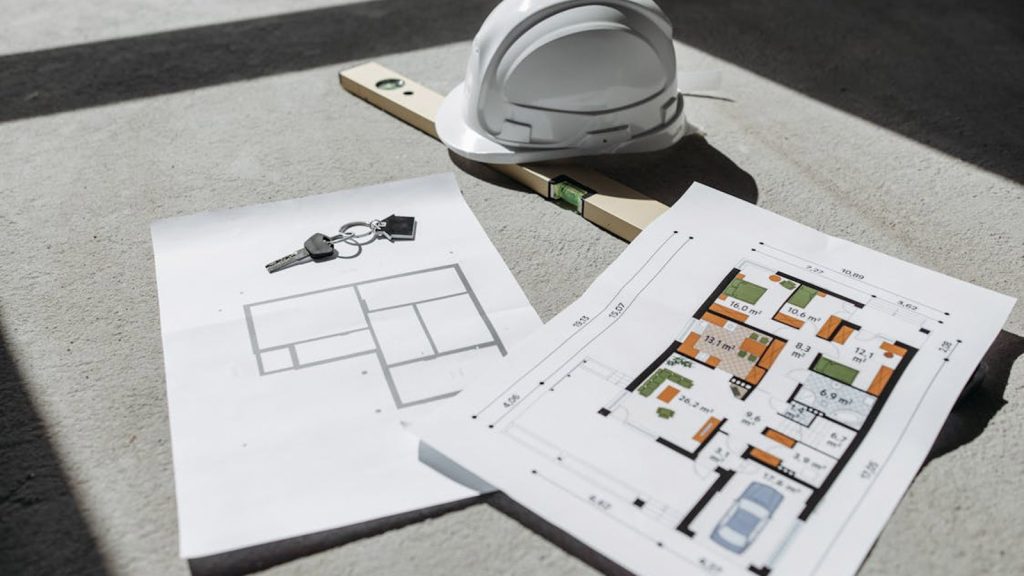
Constructing a House – Materials

House Construction

As homeowners, we only have one goal – to buy and live in the perfect house. That sense of perfection comes with the knowledge that your home is beautiful, elegant, functional, and tough-as-nails durable. But do you know if your house really is as safe as it seems?

Dolmar understands the need for a house that would last you the rest of your life. Understanding what makes your dream home is as important to the company as building it for you. So here are the usual materials used for house construction.

Metal. If man cannot live by bread alone, then so would a house made completely of concrete or wood. Steel is a necessary reinforcement to concrete. Without steel or metal, the house will not last long. Rebars – a whole mesh of firm, steel rods – are mostly used for a house’s basic frame and foundation. It is earthquake and fire resistant. The existence of metal in a house ensures the safety and sturdiness of your home.

Hollow blocks. Blocks form part of the vertebrae of any structure. These part-cement, part-sand, part-gravel-and-water blocks are made and cast in the form of a rectangular block with partitioned hollow cores. (There are usually 1-3 holes per block.) These are easier to lift compared to more solid blocks. It also makes reinforcing easier since the holes allow the builder to put steel bars for a sturdier foundation. The holes also allow plumbing apparatus and electrical conduits to be coursed through.

Wood. Back in the early days, wood was the most commonly used material in house building. The thing with wood though is that it is less durable and dependable since it is more susceptible to termite attacks especially if the soil is teeming with the said critters. Nowadays, houses usually have wood as main doors and stairs.

Fiber cement. Reinforced cement – or commonly known as fiber cement – is the number one alternative to wood. Mainly made of cement, sand, water, and plant fibers, it is asbestos-free. It is also resistant to rotting, warping, fire, and termites, thus making it the best option to wood. This is normally used for walls due to its durability.

Ceramic tiles. Floors are usually finished with a layer of ceramic tiles. These tiles are used because they do not absorb water and stains and easy to clean. They are highly durable (unless something really tough is dropped on it) and easily replaceable if it needs changing. It is not high maintenance – a broom, rag, or mop will do. Best of all, ceramic tiles are very affordable.

Construction materials are definitely not something we think of everyday, even when we are purchasing the house you want. But knowing how your home is done – and how durable your house is – gives you a peaceful security that can absolutely last you until your retirement years. No more questions, no more doubts.

House Building 101

House Building

When you go on a site tripping, the real estate agent will show you a feast for the senses. There is a thorough explanation of in-house facilities, a grand tour of the model house, and an emphatic discussion on closest off-site amenities such as hospitals, churches, schools, etc.

But does it ever cross your mind if the house you want to buy is as sturdy as the wall of Jericho?

We at Dolmar believe in the power of information and educating our clients about the property that they dream of purchasing. This article is a discussion on the basics of house building

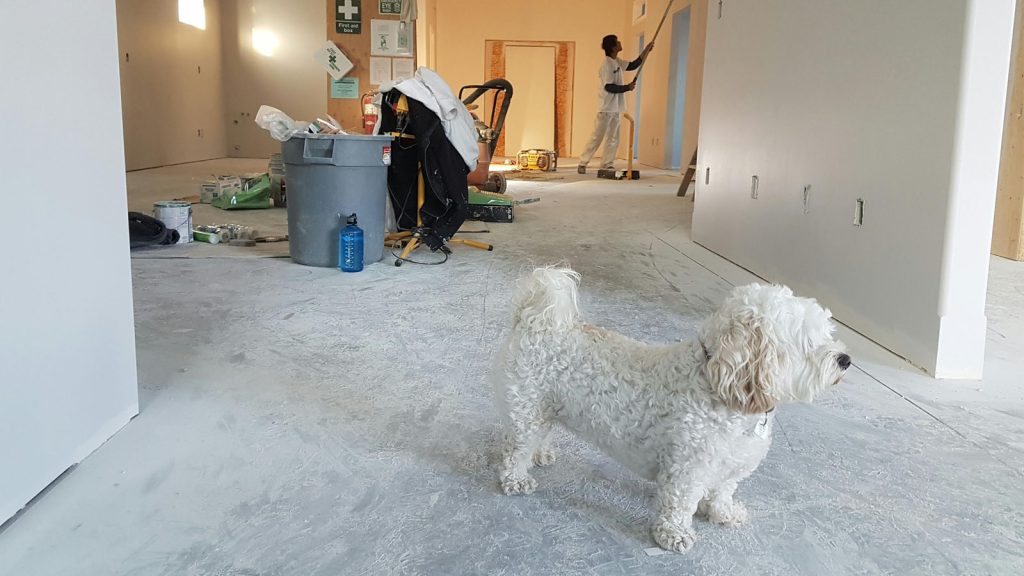
Dolmar still believes in the conventional way of consruction – mainly hollowblocks and metal. Wood is used scarcely to prevent termites from inhabiting houses, hence the concreting of the house. There are four stages of construction in the form of percentages – 20-40%, 60%, 80%, and 100%. It may look Greek to most people, but in layman’s terms, here’s what they all mean:

20-40%. Excavation for the foundation is done as the first part of house construction. As we know, all houses start out with a solid foundation. A good foundation basically means that the walls and columns are fortified with steel bars, concrete. (All of your walls have columns to ensure sturdiness of the house.) Start of the brick/stone/concrete block-laying also happens during this time. The rafters (or the roof’s skeleton for the imaginative), battens (a flat and long strip of metal or wood that is mainly used to hold something in place)and the window steel frame/casement sums up this stage.

If the unit has a 2nd floor, the whole 1st floor column is put to concrete and beams are already put in place. The toilet and bathroom beams and slabs are also set in concrete. The 2nd floor’s roof beams, slabs, rafters and battens will conclude this phase of construction.

60%. For this next part of house creation, the roof is installed. At the same time, plastering of walls, ceiling and partition installation (for rooms and specific areas of the house) are also done. The steel casement for windows are also checked here, but still no glass installed since there are still a lot of things that need to be done to the house.

80%. We are almost nearing the endgame of the house. But before that, the carpentry work is done (for the walls and the doors.) The tile-men then come in to install the partial tile setting of the house floors. The stairs are also partially installed.

100%. Finally, all finishing touches are done at this stage. Painting everything that needs to be painted, check. Installation of all electrical and plumbing fixtures is also a check. Tile works completed, another check. The lot is cleared of unnecessary debris, a check yet again. And the installation of the concrete electric meter post completes the process.

Voila! The house of your dreams is finally complete.

House Hunting 101 – Location

The old adage goes, “different strokes for different folks.” People have different tastes and needs. But most house hunters tend to scout for nearby establishments first before even contemplating the possibility of buying a house in a particular area.

When it comes to looking for your own property, one must always weigh the pros and cons of living in new territory. Here are several things that you might want to consider.

Grocery and/or wet market. Food is life. Preparing food for the family is a very essential part of a parent’s responsibilities. Having a grocery or several community market stalls near the house or subdivision will make meal planning easier and less of a hassle. Plus, there is no need for a longer commuting time just to buy food for the household.

Police station. “Is the area/location a safe place to live in?” This is almost always the first question asked by a potential homeowner. Safety is first and foremost in any community. Visibility of the police force or community helpers is essential in ensuring a secure and well-protected environment.

School. For couples who already have children or those who are just about to start their own families, this is a must-have. An extended travel time is tiring for any person, more so for a child. A school nearby will eliminate unnecessary time for travel.

Hospital. Let’s face it. Whether adult or child, sickness is an inevitable life event. Colds, cough, and fever are the most common ones. A trip to the nearest hospital is the only solution that can set one’s mind at ease – the faster you get there, the better.

Church. Regardless of religion, going to church is a well-known Filipino tradition. Some people also go there anytime just to meditate or commune with the Highest Power. During Christmas season, people flock to church for simbang gabi. Having a nearby church makes it easier for regular churchgoers to go to mass or service.

Mall or commercial center. Nearby entertainment is also a come-on for house hunters. Whether to buy furniture, watch a movie, go shopping for personal stuff, or just lounge around in the comforts of an air-conditioned building, having such a place to go to any time is a comforting thought for those who prefer to go to malls during their quality time with themselves, a partner, or their families.

Buying a house is a long term investment. This is the reason why one needs to make sure that they get their perfect house in the best and safest environment.

The Pros of Owning a House or Condo

House Hunting

Every Filipino yearns of having his own home someday. Whether it be a house or a condo, buying his own property becomes priority savings for the home investor. He will toil night and day just to fulfill his dream of having his own house which in turn he will pass on to his future children and family.

The good news is that more and more families are putting their hard-earned money on house ownership than property rental. Based on the estimates of the Philippine Statistics Authority’s 2015 FIES (Family Income and Expenditure Survey 2015, Table 3), out of 22,730 families, a vast majority of almost 16,000 families opted to live in their own houses rather than renting a house for basic shelter.

There are pros and cons in house or condo ownership. But the pros outweigh the cons. Here are some of the reasons why owning property is good for you.

Sudden rent increases. Let’s face it. Sometimes, there are some unforgiving landlords who – at the ungodliest of times – will tell you that in a month’s time, there will be a rent increase. This will often lead to an elusive peace of mind since you will now be forced to either pay the increase or look for a new house to rent or quarrel with the landlord for the short notice. If you have your own house, you can rest safe with the knowledge that no one can bother you with unnecessary problems.

Mortgage and monthly amortization. Unless you are included in the Forbes list of millionaires, common house buying practice for the masses includes a hefty but affordable mortgage. The money you shell out for amortization is like a savings fund for you and your family, and not for the landlord’s pocket.

Safety and security. You have probably heard of horror stories wherein a family is looking for a new house to rent as the house owner told them that he/she will be coming back to live in the house, or the property will be put under renovation, or worse, the condo was already bought by someone else. If the property you are living in is already yours, there is no danger of you getting evicted at any time.

HDMF (Home Development Mutual Fund). Whether you are looking for a new or foreclosed property, the government made sure that there is an agency that can help with your house or condo-hunting needs. More commonly known as the Pag-IBIG Fund, the HDMF is a life-saver for those who are looking to purchase property.

Whatever you decide on, bear in mind that renting or owning property will still cost you money. With that in mind, then do have your own house to give you that fitful sleep of knowing that you are safely nestled in a space you call home.

Dolmar Land
Typically replies within an hour.
Welcome! Note that you must be logged in to your FB Messenger to chat with us. Meta doesn't allow anonymous messages anymore.
Send a message
This site uses cookies to offer you a better browsing experience. By browsing this website, you agree to our use of cookies.