Javascript Disabled?

Your browser seems to have Javascript disabled. This website requires Javascript to display and run properly. It's totally safe.

If you want to continue using this site, please enable Javascript from you browser settings first, then come back here and refresh this page.

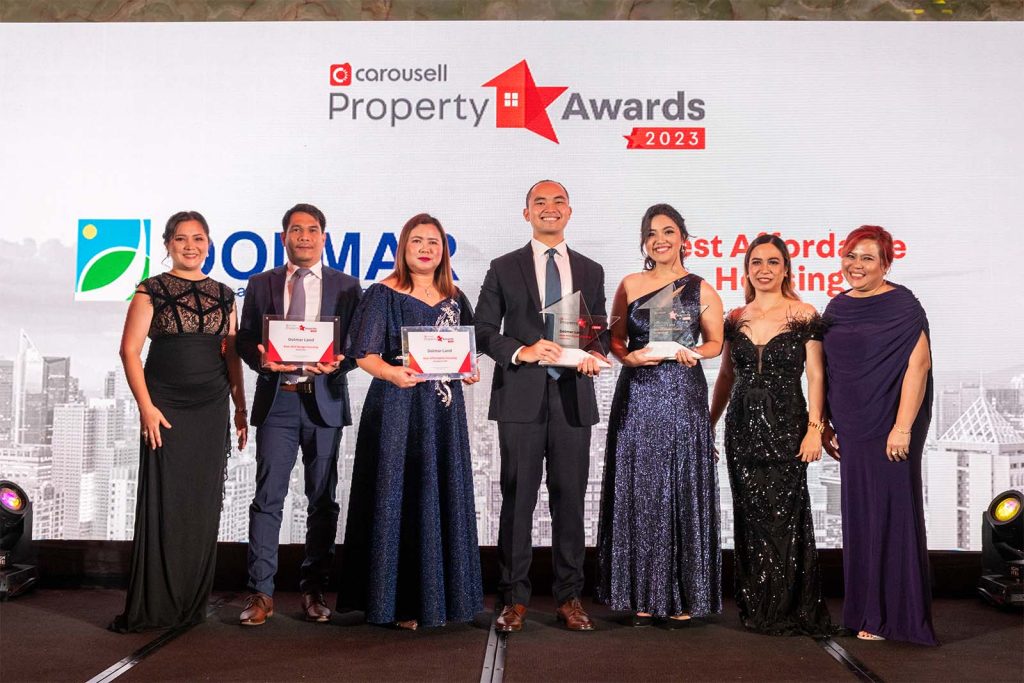
2023 Carousell Awards – Best Affordable Housing – Northgrove Hills and Best Mid House Range Housing – Bella Vista

Carousell Award 2023

The year 2023 was marked by milestones for Dolmar Land. Aside from rebranding from Dolmar to Dolmar Land, the company embarked on developing more residential units to serve as future homes for Filipino families. Another important highlight was Dolmar Land’s win at the Carousell Property Awards, where two of their properties were recognized under the “Best Affordable Housing” and “Best Mid-range Housing” categories.

The Carousell Property Awards is an annual event celebrating excellence in the real estate industry. This prestigious event brings together the best developers and properties, showcasing innovations and high standards in real estate. For Dolmar Land, it was their first time participating in such an esteemed event, and their commitment to quality and community-building was clearly acknowledged. The awards highlighted Dolmar Land’s dedication to blending modern living with traditional values, and their success in creating vibrant communities.

View Full Blog

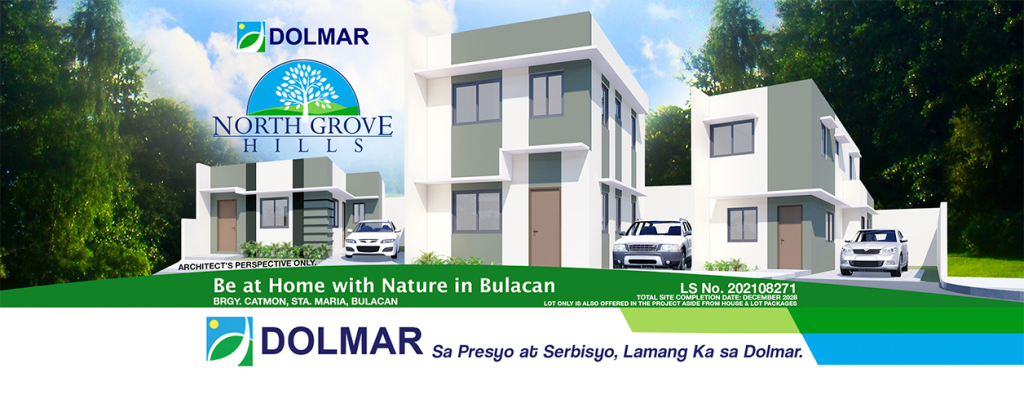
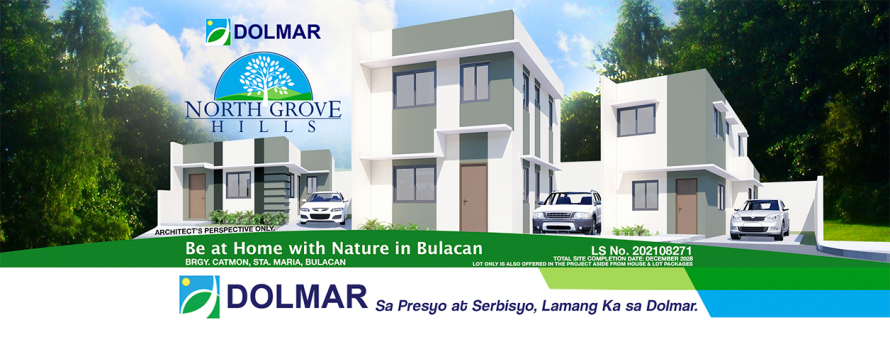
Be at Home with nature in Bulacan

NGH

Are you looking for a community where there’s a balance of living space and greenery in its surroundings? The latest residential project of Dolmar in Bulacan, NORTHGROVE HILLS, is a community worth considering in your house hunting.

Northgrove Hills is a 13.6-hectare modern development that offers single-attached houses to homebuyers. It has open green spaces, making it easy for residents to commune with nature and stay active outdoors.


NGH


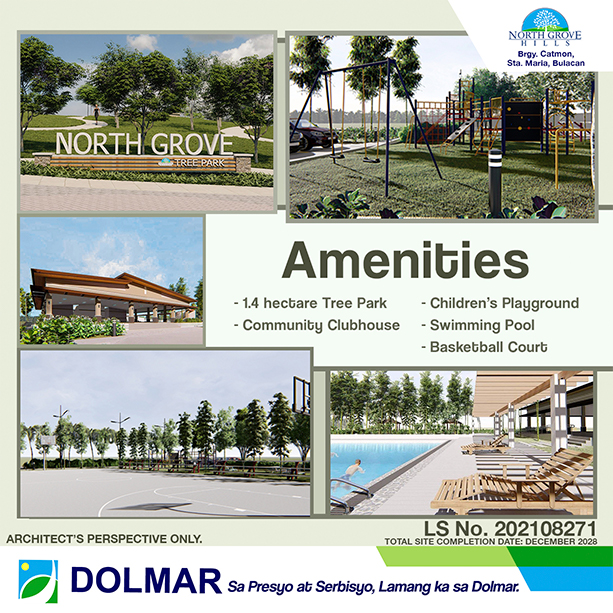
NGH Amenities

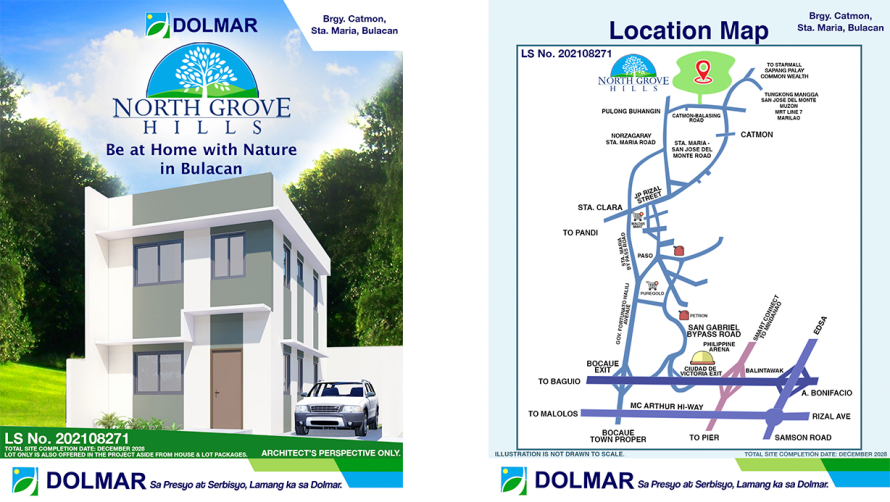
Located at Sitio Parang, Brgy. Catmon, Sta. Maria, Bulacan, Northgrove Hills is easily accessible to several major roads and highways, hospitals, places of worship, and commercial establishments. To ensure the safety of homeowners, the residential development is secured with a perimeter fence and round the clock security.

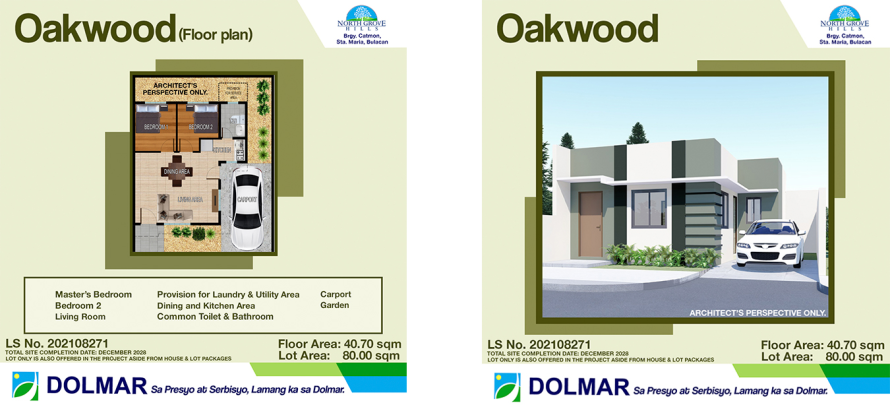
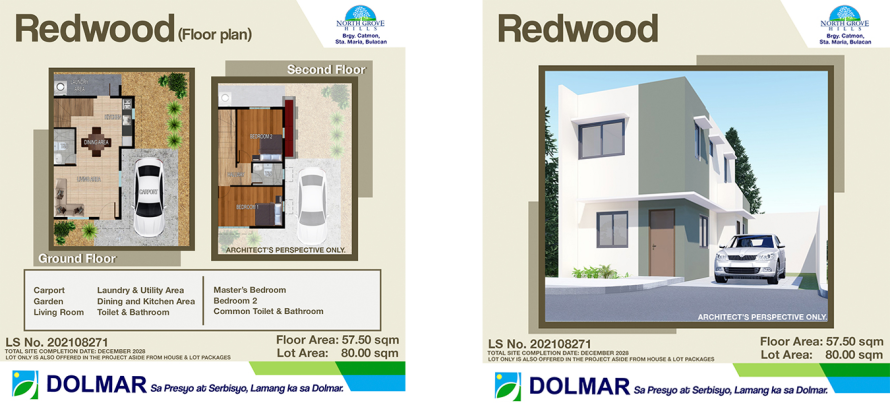
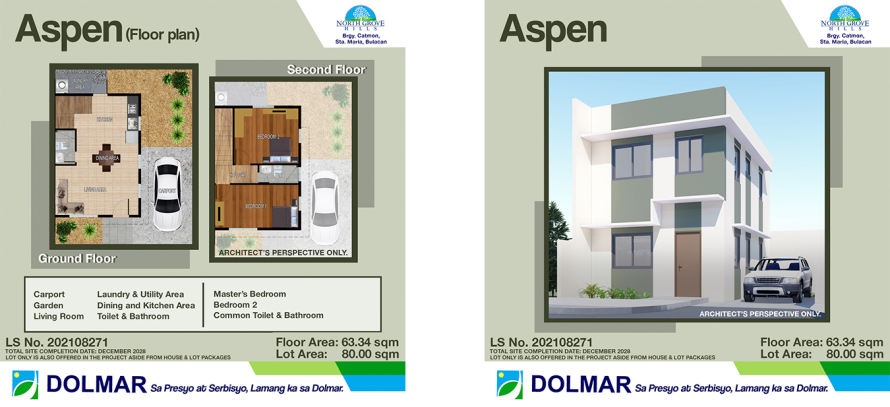
Homebuyers have three model units to choose from – Oakwood, Redwood, and Aspen – that are appropriate for every type of family. Each unit has 2 bedrooms, a toilet and bathroom, and a provision for carport and balcony.


NGH

The Oakwood, with its 40.70sqm floor area, is fit for starting families with two to three members.


Oakwood


Redwood, on the other hand, is a modern-style single-detached 2-story home. Its total floor area is 57.50sqm – 24.15sqm at the ground floor, and 33.35sqm at the second floor. Each floor has a toilet and bathroom, and at the second floor, the two bedrooms.


Redwood


Aspen, the most spacious among the three model units, has a 63.34sqm total floor area. This living space is subdivided into 31.55sqm at the ground floor, and 31.79sqm at the second floor. Like the Redwood model, each floor has a toilet and bathroom, and two bedrooms at the second floor, but with a relatively bigger space.

Aspen


Once turned over, homeowners of each unit type have a hand at designing the interiors to their liking. For those who already have a design in mind, lot packages are also available, giving them flexibility in building their dream home.

Nature lover or not, you will find Northgrove Hills as a great place for respite at the end of a busy day. Having your home surrounded by nature will help relax your mind and make you feel refreshed. Now, isn’t that great value to a home that you’re going to live in and grow your family?

Talk to a Dolmar representative to learn more about Northgrove Hills. Sa Presyo at Serbisyo, dito ka na sa Dolmar!

Affordable Properties in Bulacan

When home hunting in Bulacan, consider a home that’s affordable with a community that offers best-value quality living for your family.

Dolmar – a company that helps Filipino families realize their goals of having a place to call their own – offers homes that are of good value in terms of price and customer service. Most of their communities are located in Bulacan, which is easily accessible to and from Metro Manila, making it a viable location for individuals working in the metro.

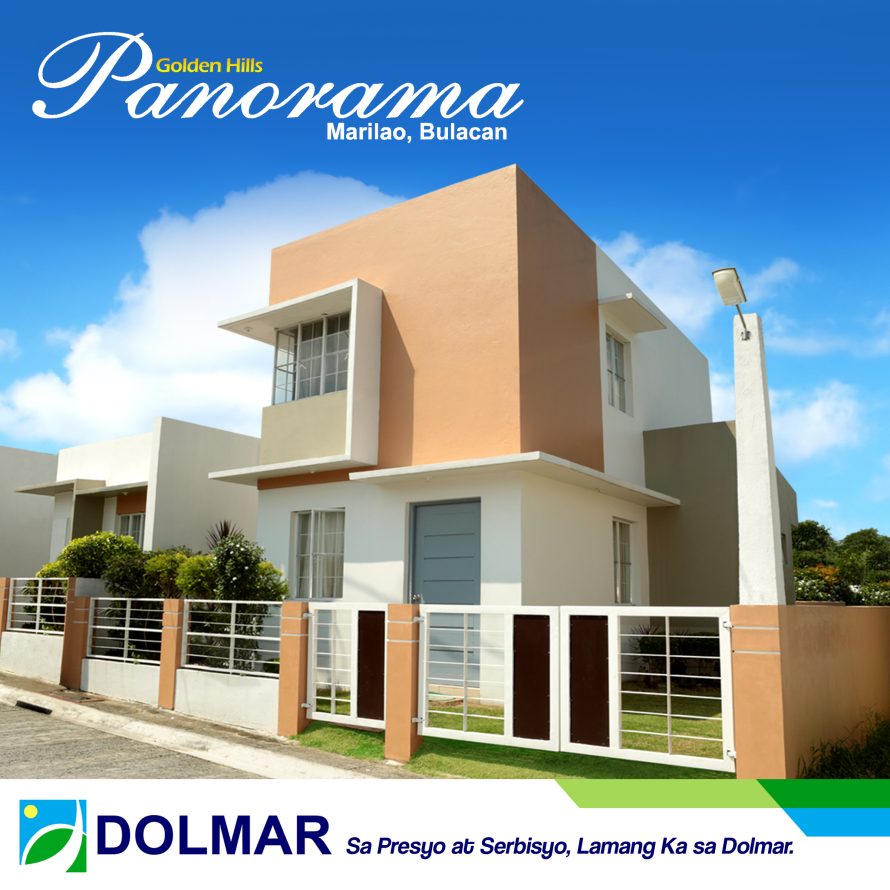
Panorama in Marilao, Bulacan
Growing families have the option among Magnolia, Olive, and Acacia House models, which have 2 bedrooms, a storage room, and a carport. Magnolia House is a single-detached 2-storey home. However, Olive is a single-attached 2 storey-home, while the Acacia House is a single attached 1-storey home.


Panorama

Panorama’s amenities include a clubhouse for social events, a playground, and a basketball court that help promote a healthy lifestyle among its community members.

Communities in Sta. Maria, Bulacan
Another option for growing families is a soon to rise community development in Brgy. Catmon, Sta. Maria – Northgrove Hills, which has lots of green spaces making it easy for residents to commune with nature and stay active outdoors. Residents get to enjoy amenities such as a community clubhouse with swimming pool, children’s playground, and a 1.4-hectare tree park. Development of the community is underway, and more details about the project will be available in the coming months.

North Grove Hills

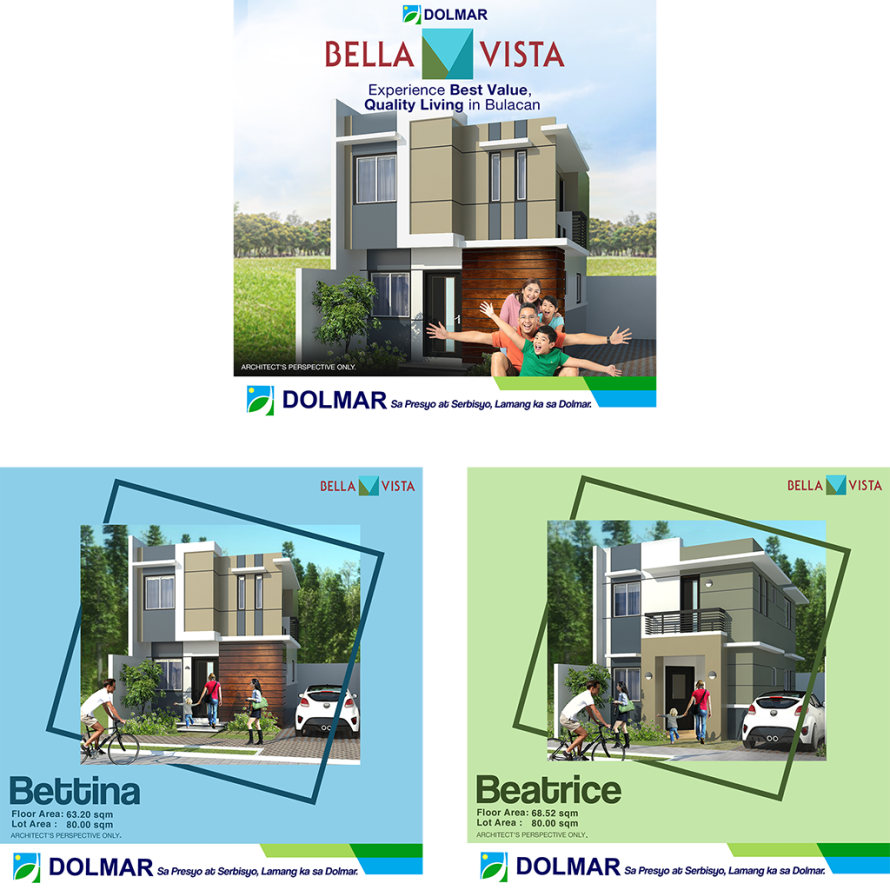
For bigger families, Bella Vista is another community development by Dolmar that gives best value and quality living experience in Brgy. San Vicente, Santa Maria, Bulacan. It features modern yet affordable houses that are complete with utilities. There are 2 single-attached model units to choose from – Bettina and Beatrice – which both have 3 bedrooms, 2 bathrooms, and a provision for carport and balcony. Lot packages are also available for those who prefer to design and build their own home.

Bella Vista

Bella Vista also boasts of recreational facilities in the community that each member of the family will enjoy – a basketball court, playground for the kids, clubhouse and swimming pool where everyone in the family can gather and spend time together outside the home.

Buying a home that’s easy on your savings is not impossible. You just need to know your preferences, do your research for possible options, and consider spaces outside the metro yet still easily accessible, like Bulacan.

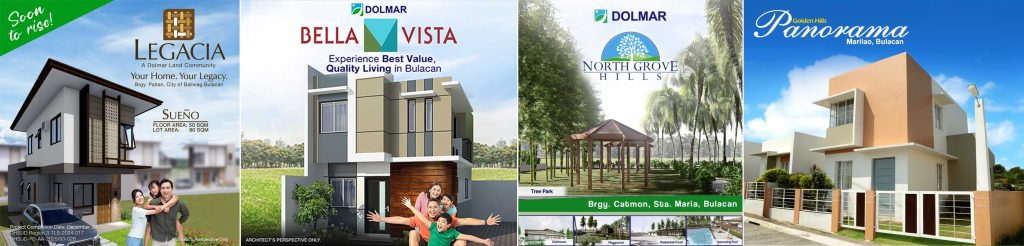
When looking for a home in Bulacan that’s affordable and with best value, check out Dolmar properties – Panorama, Northgrove Hills, and Bella Vista. Sa Presyo at Serbisyo, dito ka na sa Dolmar!

Learn more about these properties, as well as other Dolmar projects from our representatives. Email us at info@dolmar.com.ph, or like and follow us on Facebook (@DolmarOfficial) for updates.


House Hunting Basics: Location, Location, Location

Location

The basic rule of house hunting remains to be: “Location, location, location”. A house’s price and condition may vary and change, but the importance of LOCATION remains the same. Location (in the short term) not only considers proximity and convenience to places you frequent, but also (in the long run) affects the price of a property.

When looking for the home for you and your family, it’s important to take into account the key places in the surrounding community (or barangay), and the condition of the neighborhood of the property you plan to invest in and build your future on.

1. Accessiblity

Everyone values convenience. Having a great location means easy access to roads and modes of transportation in the area. Navigate through your neighborhood with ease!

2. Food and Supplies

Part of the basic human need is physiological (i.e. food, drink, clothes, etc.). You should consider being in close proximity of groceries, markets, malls, and commercial centers in your vicinity to feed this need.

3. Health and Safety

Emergencies happen. It all comes down to what resources are available to you when these unforeseen circumstances occur. Having hospitals and police stations nearby creates a sense of security and provides you with urgent help should you need it.

4. Community

A community where you can build and grow relationships provides a complete living experience to a homeowner. Be it religious groups, school affiliations, or other various groups, nearby schools and churches should be on your to watch list.

As your partner in house hunting, Dolmar checks all of these items for you.
See below for the locations of our active projects:

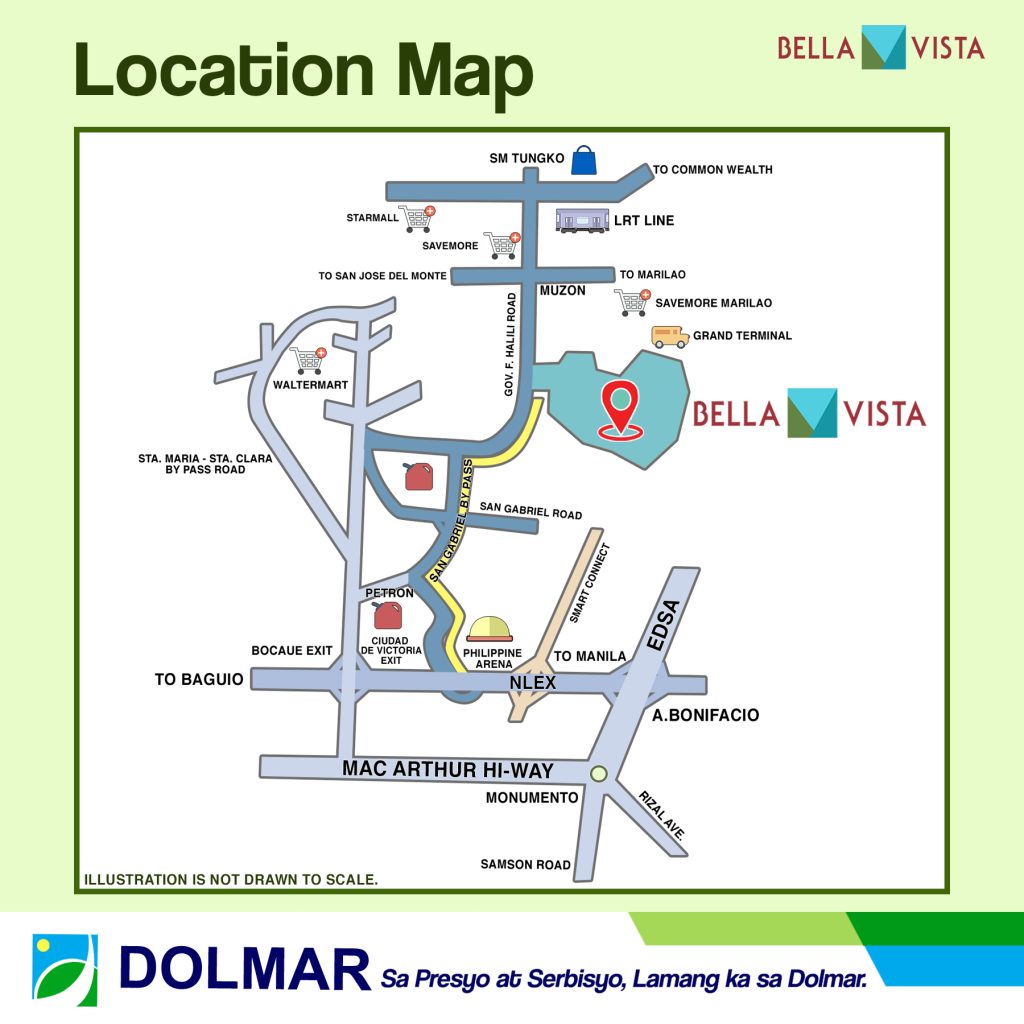
Bella Vista

Address: Barangay San Vicente, Sta. Maria Bulacan

Bella Vista Map
  • 10 minutes to Santa Maria Bayan (6.5 km)
  • 15 minutes to Philippine Arena (19 km)
  • 5-7 minutes to Muzon (4 km)
  • 20 minutes to SM San Jose Del Monte (9.7 km)
  • 15 minutes to MRT 7/Tungko (5.4 km)
  • 20 minutes to SM Marilao (14 km)
  • 45 minutes to SM North/Trinoma (29 km)

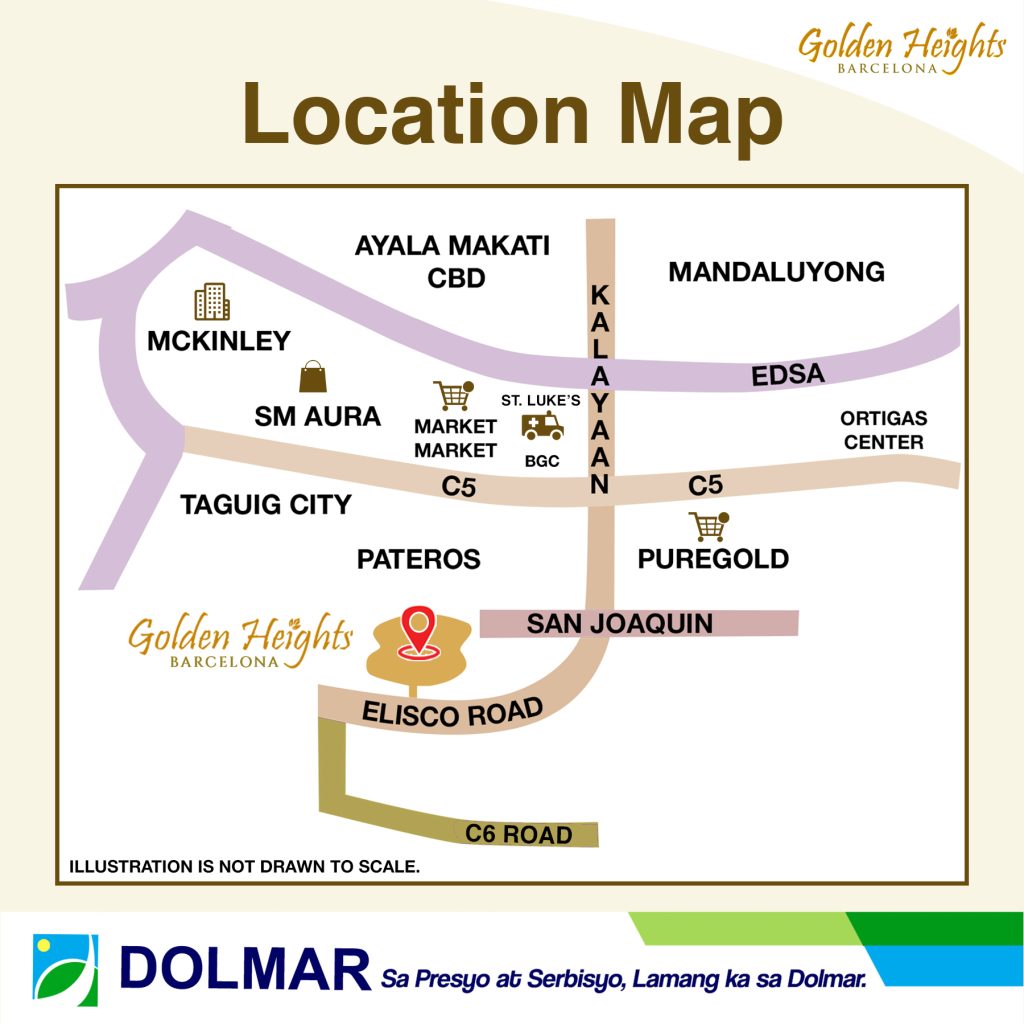
Golden Heights Barcelona

Address: Elisco Road, Barangay Kalawaan, Pasig City

Barcelona Map
  • 5 minutes to San Joaquin School (1.5km)
  • 6 minutes To Puregold Pasig ( 2km )
  • 10 minutes to ICC Church (2.4 km)
  • 25 minutes to St Luke’s Hospital ( 5km)
  • 20 minutes to Market Market ( 4.4 km)
  • 25 minutes to BGC ( 4.7 km)
  • 22 minutes to Mckinley Hill ( 6.5km)
  • 30 minutes to Ortigas Center ( 7.8km)
  • 30 minutes to SM Megamall ( 7.6 km)
  • 40 minutes to Naia Airport ( 12.5 km)

DISCLAIMER: Times (minutes) indicated are estimated and may vary depending on actual traffic situation.

Buying a house is a long term investment. We know that such a decision needs careful thought and deliberation. You can rest assured knowing that Dolmar will be your trusted partner in finding your own dream DOLMAR Home. Sa Presyo at Serbisyo, dito ka na sa Dolmar!

Learn more about Bella Vista, Golden Heights Barcelona, and other Dolmar projects from our representatives. Email us at info@dolmar.com.ph, or like and follow us on Facebook (@Dolmar) for updates.

A Guide to Basic Pag-IBIG Housing Requirements for the Locally Employed

Pagibig Loan

Picture this: You’re in your 30s with a stable career on Philippine soil. You see yourself moving into your own house and lot. You imagine the patio and garden with all the brightly colored greens and daintily hanging orchids leading to your doorway. Upon entering the main house, you see your living room extending all the way to the kitchen. Putting a gaily bounce to your steps, you skywalk your way up to see your master suite of a bedroom – king sized bed, a fully functional home entertainment system, and spacious cabinets. And the bathroom is the ultimate bath of your dreams. It’s the perfect house for you and/or your future family.

Wouldn’t you want that dream home all to yourself?

You can have it all, especially if you plan on putting your Pag-IBIG savings to good use.

To get you started on your beautiful home, here are some of the basic requirements you need to apply for a housing loan or a mortgage from Pag-IBIG.

  1. Pag-IBIG’s Housing Loan Application form. You can go to any Pag-IBIG office near you. Or you can opt to download and print the form from the Pag-IBIG website – https://www.pagibigfund.gov.ph/ Just click on the PDF icon to open the file and download. Please answer the form as honestly and truthfully as you can.
  2. Proof of Income. Of course, Pag-IBIG would want to know if you are capable of paying for the property should they allow you your mortgage. If you are locally employed, you just need to submit one of the following:
    1. A notarized Certificate of Employment and Compensation (CEC) which will indicate your gross monthly income, monthly allowances, and other monthly monetary benefits;
    2. Your latest Income Tax Return (ITR) for the year prior to your loan application with an attached BIR Form 2316 with a BIR stamp of receipt, and/or;
    3. One month payslip within last 3 months before the date of your application for loan if you are a non-government employee. However, if you are a government employee, you need to attach either your CEC or ITR to your one month payslip.
  3. One valid ID. You need your valid ID (government-issued, if possible), one from your Co-Buyer, and the Developer’s Authorized Representative and Attorney-In-Fact. (The latter two are applicable only if you are buying property that a Developer helped evolve).

While there are other requirements necessary prior to the release of your mortgage, these requirements are primary ones that will immediately help Pag-IBIG assess and approve the mortgage amount that you are asking for. Once you have completed all these, you can now go to your nearest Pag-IBIG office to pass the requirements as the first step to securing the house of your dreams.

Bank Documents for Home Loan Requirements – OFWs

Bank Documents

The Philippines is well-known for our culture, our smiles, and our industrious OFWs. The best way for our overseas workers to celebrate life with family is if they can be free of debt and to finally have their own house. A house that’s free from any encumbrances, a house that they can call their own.

Getting a home loan from the borrower’s own bank is less time consuming for both him/her and the bank. To make house-buying easier for our new, unsung heroes, Dolmar has come up with a list of necessary documents in applying for a home loan.

  1. Bank application form. The forms of the different banks look different but on the inside, they basically have the same data needed from a borrower – name, address, birthdate, marital status, contact numbers, etc. If borrower is married, his/her spouse is also required to sign on this form. If the borrower is single, a separate application form is required from his/her co-borrower.
  2. Valid photo-bearing identification cards with signature. If the OFW borrower does not have available local IDS on hand, they may simply show their government-issued passports and Seaman’s Book to the bank. It is also a good idea to have your ID photocopied should the bank need a photocopy of it from you.
  3. Marriage contract. This is a must-have for all married borrowers, whether OFW or locally employed. One can ask the bank whether they accept PSA copies (from PSA, formerly the National Statistics Office) or certified true copies (from the city hall where marriage took place) of the said document.
  4. Proof of remittance. Some banks ask for 3 to 6 months proof of remittance via their bank statements.
  5. Income tax returns. Some banks do not require this since most OFWs do not have it, so it is best to do a bank inquiry on this.
  6. Certificate of Employment (COE). For land-based employees, some banks would ask for a COE with the employer’s email or a Consularized COE. Sea-based employees would need to provide their latest POEA contract and/or a Crew contract and Exit Pass which is required to be validated by the POEA.
  7. Collateral requirement. These would usually be the following: Transfer Certificate of Title (or Condominium Certificate of Title if it’s a condo), Tax Declaration, Lot Plan with Vicinity Map (which has to be certified by a licensed geodetic engineer), Contract to Sell/Reservation Agreement (if property is via developer), with an additional Master Deed of Declaration of Restrictions (if property is a condominium).
  8. Special Power of Attorney (SPA). Some banks require a notarized or duly authenticated SPA, which would give the spouse the power to sign or decide on any concerns related to the loan. This should be duly authenticated by the Philippine Consulate.

No bank is made equal. Our local banks have different requirements. To facilitate ease of application, it is strongly suggested that the borrower have all of these on hand before going to the bank.


Bank Financing 101 – Basic Documents for Locally Employed

Bank Documents

Are you easily overwhelmed with paperwork? If you are the one tasked to take care of the loan application, we feel you. There are a lot of documents you need to prepare before getting that seemingly elusive bank loan. Fortunately, developers (such as Dolmar) and your realty agents are there to help you with some of the paperwork needed to secure said mortgage.

That said, here are some of the necessary pre-processing documents you may need to prepare in getting a home loan from banks:

Application form. All banks will require this from you. You get this form from the bank itself.

Valid Identification Cards. All banks will naturally require 2 valid IDs to confirm the borrower’s identity. They may sometimes even get a clear copy of a valid ID of the borrower’s spouse or any other signatories of the loan.

The following are the allowed IDs for any bank loan:

  • Passport
  • UMID (Unified Multi-Purpose ID Card
  • TIN (Tax Identification Number) ID, if any
  • Driver’s license
  • PRC (Professional Regulation Commission) ID
  • NBI (National Bureau of Investigation) clearance
  • Voter’s ID
  • Postal ID
  • GSIS (Government Service Insurance System) e-Card (if you are a government official)
  • SSS (Social Security System) ID
  • Police Clearance (from your local government unit)
  • Senior Citizen’s Card
  • OWWA (Overseas Workers Welfare Administration) ID
  • Seaman’s Book
  • Company IDs

Income documents. For the locally employed, you will need:

  • Your (or the borrower’s) latest ITR (or Income Tax Return, W2). Some banks may require you to present or give them a copy of the last 2 or 3 years of your ITR.
  • Certificate of Employment – which you need to get from your current employer.
  • Latest payslips – at least 3 months which should include your salary breakdown.

Collateral documents. While you may know and trust yourself, the same cannot be said about the bank you are borrowing from. Banks will only trust a borrower if they are assured that in any eventuality, the loan can be paid in one way or the other. Enter the borrower’s collateral which is usually an asset or a property owned by the borrower. This collateral should be of either the same or exceeding value as the amount which remains on the loan. Properties of value could be in the form of a second land or house titles, or your current home. For a home loan, the collateral is the house you are buying.

Documents of this type come in the form – but not limited to – the following:

  • Transfer Certificate of Title (or a clear copy of it)
  • The Deed of Absolute Sale (or Contract to Sell, or the Reservation Agreement) from the developer
  • Tax Declaration/clearance/receipts.
  • Some – but not all – banks may also require the vicinity map (usually that which has been certified by a geodetic engineer), or a bank form you need to sign giving the bank authority to verify and inspect the property.

MRI (Mortgage Redemption Insurance) application. As the name suggests, it is a life insurance taken on the borrower for the benefit of those he/she may leave behind. In the case of his/her untimely death or total disability, this policy covers part or the entire unpaid portion of the home loan.

Additional forms. Some banks require additional documents or bank forms, depending on the need. For those who are working in the Philippines, they made need the following as well:

  • SPA (Special Power of Attorney.) Sometimes when one is employed locally but is based or sent to provinces for work, they will sometimes need an SPA from an authorized representative especially if there are immediate needs related to the loan.
  • Latest bank statements in the last 3-6 months.
  • Marriage contract, if married.

Understanding what you need for your home loan is half the battle. As long as you know what document copies you need in acquiring a home loan, then the job becomes as easy as pie.


Condo Maintenance Expenses

Condo

Reachable – that is how owning a condominium unit is these days. Gone were the days that the highly regarded condo unit was considered as just eye candy. Buying a condo nowadays is as easy as purchasing your own car. In fact, they have almost the same terms of sale – low/zero downpayment, low and reasonably priced monthly amortization, etc. But that is not all there is to it.

Here at Dolmar, we want to show you not just the positively light and pleasant side of condo living. We would also like you to realize that comfortably beautiful living always has a cost, regardless of property developer. And that cost – aside from your monthly amortization – usually depends on your unit’s floor area and/or location.

Association dues. Whether you live in a regular house or a condo, you will still need to pay your association dues. You start paying for this as soon as the unit has been turned over to you. These are used for the overall operational expenses – a shared condominium cost by all unit owners and paid monthly or annually (depending on developer) to the property management office.

In other words, the proceeds collected from unit owners are used for the upkeep of the whole condominium. Electricity and water in common areas are covered by said dues, swimming pools and public restrooms included. You also pay for security, as the wages of janitorial, maintenance workers, and security guard services come from this fee that you need to pay regularly. Your fee also covers overall maintenance repairs, income taxes (because said dues are now subject to income tax and value-added tax as per BIR Revenue Memorandum Circular No. 9-2013), and licenses. These dues are computed based on a fixed price per floor area. The price range depends on the location of the condominium. There is also a minimal late fee charge if this is not paid on time – which is understandable since it covers a lot of things for your comfort, entertainment, safety and security.

Parking fees. Speaking of parking, it has a separate fee. The unit itself is affordable. If you have a car though, you might want to think twice about getting your own parking slot. (Because… well, where would you park your ride, right?) It does not come with the condo package. It has a separate lot price. In other words, you not only buy shelter for yourself, but you also need to buy a slot for your car. Prices of condominium parking spaces depend on the location. Around 8-10 sqm in prime properties like the ones in Makati or BGC can go for as low as P400,000 to P1.5 million per slot. It would possibly be lower than that if it’s a semi-prime location.

What’s the best thing about having your own parking space? If you do not need it anymore, it could yield a possible future income in the form of rental to other tenants who cannot afford their own slot. Rental rates can be pegged at a possible P5,000 to P12,000 per month.

Monthly utilities. Aside from the ones mentioned, of course you also need to pay for the usual bills to keep you and your condo functional – electricity, water, internet, and cable

Whether you own a big or small unit, you are responsible for following the rules of your property management office which would also benefit you eventually. So time everything and have a monthly reminder of your due dates for a smooth-sailing and enjoyable condo living.

Constructing a House – Materials

House Construction

As homeowners, we only have one goal – to buy and live in the perfect house. That sense of perfection comes with the knowledge that your home is beautiful, elegant, functional, and tough-as-nails durable. But do you know if your house really is as safe as it seems?

Dolmar understands the need for a house that would last you the rest of your life. Understanding what makes your dream home is as important to the company as building it for you. So here are the usual materials used for house construction.

Metal. If man cannot live by bread alone, then so would a house made completely of concrete or wood. Steel is a necessary reinforcement to concrete. Without steel or metal, the house will not last long. Rebars – a whole mesh of firm, steel rods – are mostly used for a house’s basic frame and foundation. It is earthquake and fire resistant. The existence of metal in a house ensures the safety and sturdiness of your home.

Hollow blocks. Blocks form part of the vertebrae of any structure. These part-cement, part-sand, part-gravel-and-water blocks are made and cast in the form of a rectangular block with partitioned hollow cores. (There are usually 1-3 holes per block.) These are easier to lift compared to more solid blocks. It also makes reinforcing easier since the holes allow the builder to put steel bars for a sturdier foundation. The holes also allow plumbing apparatus and electrical conduits to be coursed through.

Wood. Back in the early days, wood was the most commonly used material in house building. The thing with wood though is that it is less durable and dependable since it is more susceptible to termite attacks especially if the soil is teeming with the said critters. Nowadays, houses usually have wood as main doors and stairs.

Fiber cement. Reinforced cement – or commonly known as fiber cement – is the number one alternative to wood. Mainly made of cement, sand, water, and plant fibers, it is asbestos-free. It is also resistant to rotting, warping, fire, and termites, thus making it the best option to wood. This is normally used for walls due to its durability.

Ceramic tiles. Floors are usually finished with a layer of ceramic tiles. These tiles are used because they do not absorb water and stains and easy to clean. They are highly durable (unless something really tough is dropped on it) and easily replaceable if it needs changing. It is not high maintenance – a broom, rag, or mop will do. Best of all, ceramic tiles are very affordable.

Construction materials are definitely not something we think of everyday, even when we are purchasing the house you want. But knowing how your home is done – and how durable your house is – gives you a peaceful security that can absolutely last you until your retirement years. No more questions, no more doubts.

House Building 101

House Building

When you go on a site tripping, the real estate agent will show you a feast for the senses. There is a thorough explanation of in-house facilities, a grand tour of the model house, and an emphatic discussion on closest off-site amenities such as hospitals, churches, schools, etc.

But does it ever cross your mind if the house you want to buy is as sturdy as the wall of Jericho?

We at Dolmar believe in the power of information and educating our clients about the property that they dream of purchasing. This article is a discussion on the basics of house building

Dolmar still believes in the conventional way of consruction – mainly hollowblocks and metal. Wood is used scarcely to prevent termites from inhabiting houses, hence the concreting of the house. There are four stages of construction in the form of percentages – 20-40%, 60%, 80%, and 100%. It may look Greek to most people, but in layman’s terms, here’s what they all mean:

20-40%. Excavation for the foundation is done as the first part of house construction. As we know, all houses start out with a solid foundation. A good foundation basically means that the walls and columns are fortified with steel bars, concrete. (All of your walls have columns to ensure sturdiness of the house.) Start of the brick/stone/concrete block-laying also happens during this time. The rafters (or the roof’s skeleton for the imaginative), battens (a flat and long strip of metal or wood that is mainly used to hold something in place)and the window steel frame/casement sums up this stage.

If the unit has a 2nd floor, the whole 1st floor column is put to concrete and beams are already put in place. The toilet and bathroom beams and slabs are also set in concrete. The 2nd floor’s roof beams, slabs, rafters and battens will conclude this phase of construction.

60%. For this next part of house creation, the roof is installed. At the same time, plastering of walls, ceiling and partition installation (for rooms and specific areas of the house) are also done. The steel casement for windows are also checked here, but still no glass installed since there are still a lot of things that need to be done to the house.

80%. We are almost nearing the endgame of the house. But before that, the carpentry work is done (for the walls and the doors.) The tile-men then come in to install the partial tile setting of the house floors. The stairs are also partially installed.

100%. Finally, all finishing touches are done at this stage. Painting everything that needs to be painted, check. Installation of all electrical and plumbing fixtures is also a check. Tile works completed, another check. The lot is cleared of unnecessary debris, a check yet again. And the installation of the concrete electric meter post completes the process.

Voila! The house of your dreams is finally complete.

Dolmar Land
Typically replies within an hour.
Welcome! Note that you must be logged in to your FB Messenger to chat with us. Meta doesn't allow anonymous messages anymore.
Send a message
This site uses cookies to offer you a better browsing experience. By browsing this website, you agree to our use of cookies.